.png)


Interview : Braids Gang Founder and CEO Gabriella Anderson is Putting Professional Braiders at the Forefront of the Beauty Conversation.
- frankachiedu
- 1 day ago
- 17 min read


For generations, professional braiders have shaped culture, preserved heritage and influenced global beauty trends, often without receiving the recognition, investment or opportunities afforded to the wider hair industry. Yet behind every braid lies not only artistry, but entrepreneurship, innovation and community.
Ahead of Braiders Brunch 2026, Blanck Magazine sat down with Gabriella for a candid conversation about purpose, leadership, faith, the future of professional braiding and why she believes the industry doesn't simply need more events - it needs stronger infrastructure. In this exclusive interview, she reflects on the journey from a young woman searching for confidence to a founder helping reshape the future of Black hair.
For those discovering you for the first time, who is Gabriella Anderson beyond the title of founder? Tell us a little about your journey.
Beyond the title of founder, I'm someone who has always been passionate about creating opportunities where they don't yet exist.
My journey has taken me through different chapters of the beauty industry, from working as a professional makeup artist to mentoring young people and leading community programmes. Although those experiences may seem very different on the surface, they've all been connected by the same purpose: helping people recognise their value, develop their confidence and access opportunities they may not have thought were possible.
That purpose eventually led me to create Braids Gang. What began as a platform celebrating the artistry of braiding has grown into a global community of nearly 600,000 people and a wider movement dedicated to elevating professional braiders and textured hair specialists through education, community, advocacy and meaningful opportunities.
For me, success has never simply been about building a brand. It's about building infrastructure around talent that has existed for generations but has not always received the recognition, investment or opportunities it deserves.
───
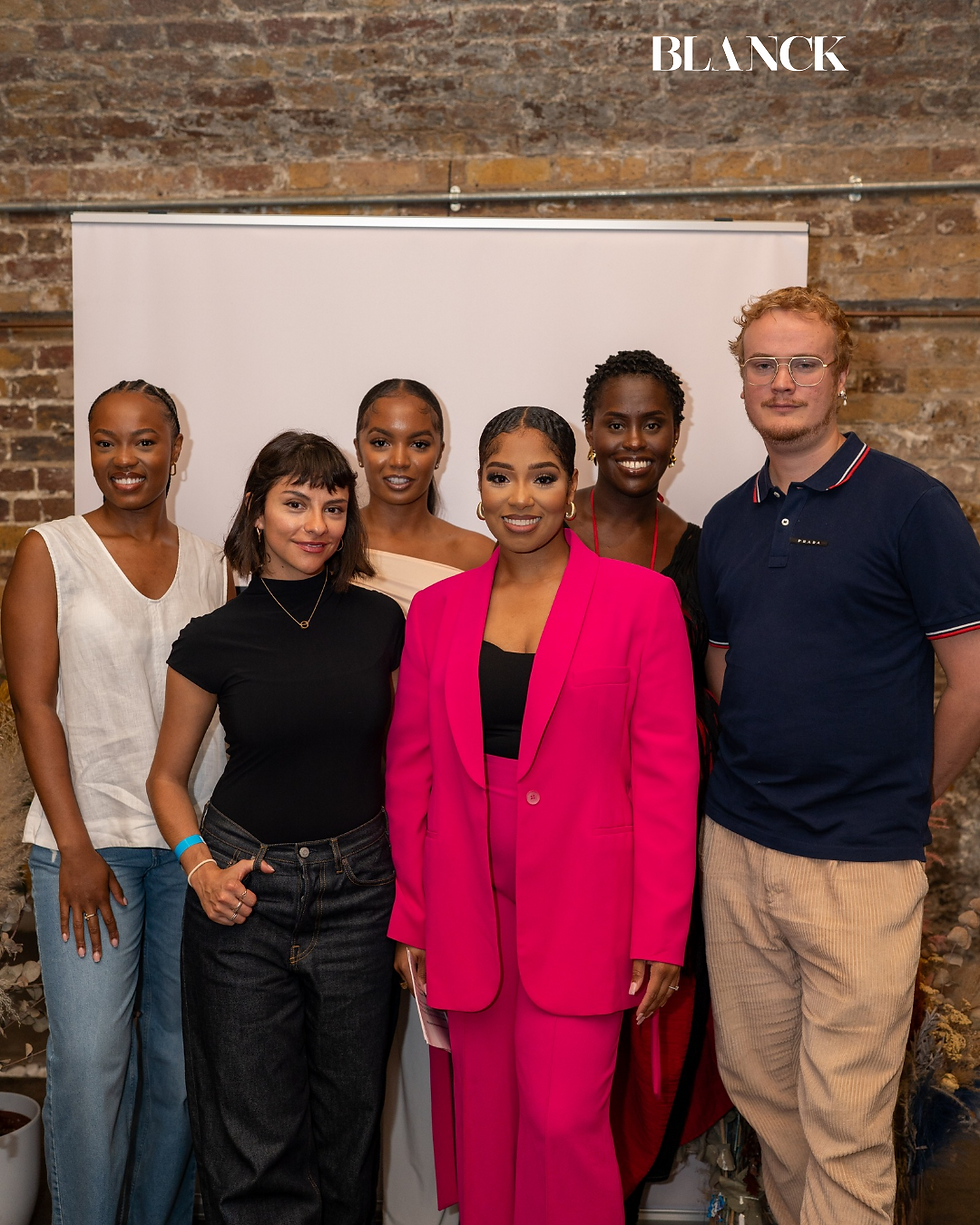
Was there a defining moment when you realised Braiders Brunch needed to exist? What happened that sparked the idea?
In my early twenties, I started attending hair shows and beauty experiences, and I loved being in those spaces. But I remember always having this question in the back of my mind: where is the space for braiders?
At the same time, I was hearing similar things from braiders within the Braids Gang community. They wanted more opportunities to connect, learn and feel supported beyond a screen. Hearing them express something I had already been thinking about felt like confirmation that there was a genuine gap.
I wanted to create a space where braiders could come together in real life, express themselves freely, create art and be surrounded by people who understood their world. But I also knew it couldn't just be about creativity and celebration. Braiders needed access to education around the business of hair, their wellbeing and the wider opportunities available to them as professionals.

I was also beginning to see the early signs of the braiding industry taking a turn. The talent had always been there, but the visibility and opportunities around that talent were beginning to change. I wanted to make sure braiders weren't simply watching that shift happen from the sidelines, but were equipped to be at the centre of it.
Braiders Brunch was born from that combination: something I had personally felt was missing, something our community was actively asking for, and a belief that the industry was entering a new chapter.
───
Every great platform begins with a personal story. What inspired you to champion braiders and create a space dedicated to them?
This is quite personal, but growing up, I struggled with low self-esteem and a real lack of confidence. I was always creative and I knew I had something in me, but for a long time, I didn't always feel seen or beautiful.
A lot of my self-worth was tied to how I looked rather than who I was. Growing up, I rarely saw girls who looked like me reflected back to me in the media, beauty imagery or wider culture I was consuming, and I didn't realise at the time how deeply that affected me.
Then I found braids.
At first, braids solved a practical problem for me because my hair wasn't growing in the way I wanted it to. But they gave me something I hadn't expected: confidence. Braids made me feel more beautiful than I had ever felt at that point in my life. They gave me a way to express myself, experiment with who I was and, in many ways, see myself differently.
I think that's why I've always felt such a deep connection to braiders. I know what it feels like to be overlooked, and I could see an entire community of incredibly gifted people being overlooked too.
I would sit in braiding shops and watch the aunties work, and even when I was younger, I could see the level of talent in their hands. They were creating intricate, beautiful work, often without the recognition, business support or professional opportunities that matched their ability. At the same time, the wider beauty industry seemed to celebrate women with straight or wavy hair far more readily than women who chose braids or locs. I noticed that imbalance, and it never sat right with me.

I kept thinking: who is championing the braiders? Who is creating space for the girls who love wearing braids and locs to see themselves reflected beautifully? Who is telling them that this part of our culture deserves to be seen, valued and celebrated?
That became a huge part of the reason I started Braids Gang. I wanted people to see themselves in the images we shared and the conversations we created. I wanted to use braids as a vehicle for confidence, representation and possibility.
Braids gave something back to me at a time when I really needed it. In many ways, Braids Gang has been my way of giving that feeling back to other people.
───
Braiders Brunch has grown into more than an event. What gap in the industry were you trying to fill when you first imagined it, and how has that vision evolved?
The original gap was simple but significant: professional braiders and textured hair specialists did not have a room of their own.
Through Braids Gang, we had spent years listening to our community and gathering feedback directly from braiders, locticians and textured hair specialists. Our global hairstylist survey gave us important insight into what professionals were experiencing, and one message kept coming through clearly: people wanted community. They wanted events. They wanted opportunities to meet, learn and build relationships with others who understood their profession.
The more I thought about it, the more unusual the gap became to me. Braiders are part of an industry with enormous cultural influence and commercial power. They use significant amounts of product, influence what their clients buy and often spend hours at a time with the people they serve. I knew this personally. I could spend five or more hours with my braider, and over time she would know so much about my life. There is a level of trust and relationship built in that chair that is incredibly powerful.
Yet, when I looked at the professional beauty industry, I couldn't see where this group of service providers was truly being catered to. Where did braiders meet each other in person? Where did they network? Where did they learn about business, wellbeing and the wider opportunities available to them? Where were the brands, retailers and industry leaders coming specifically to listen to them?
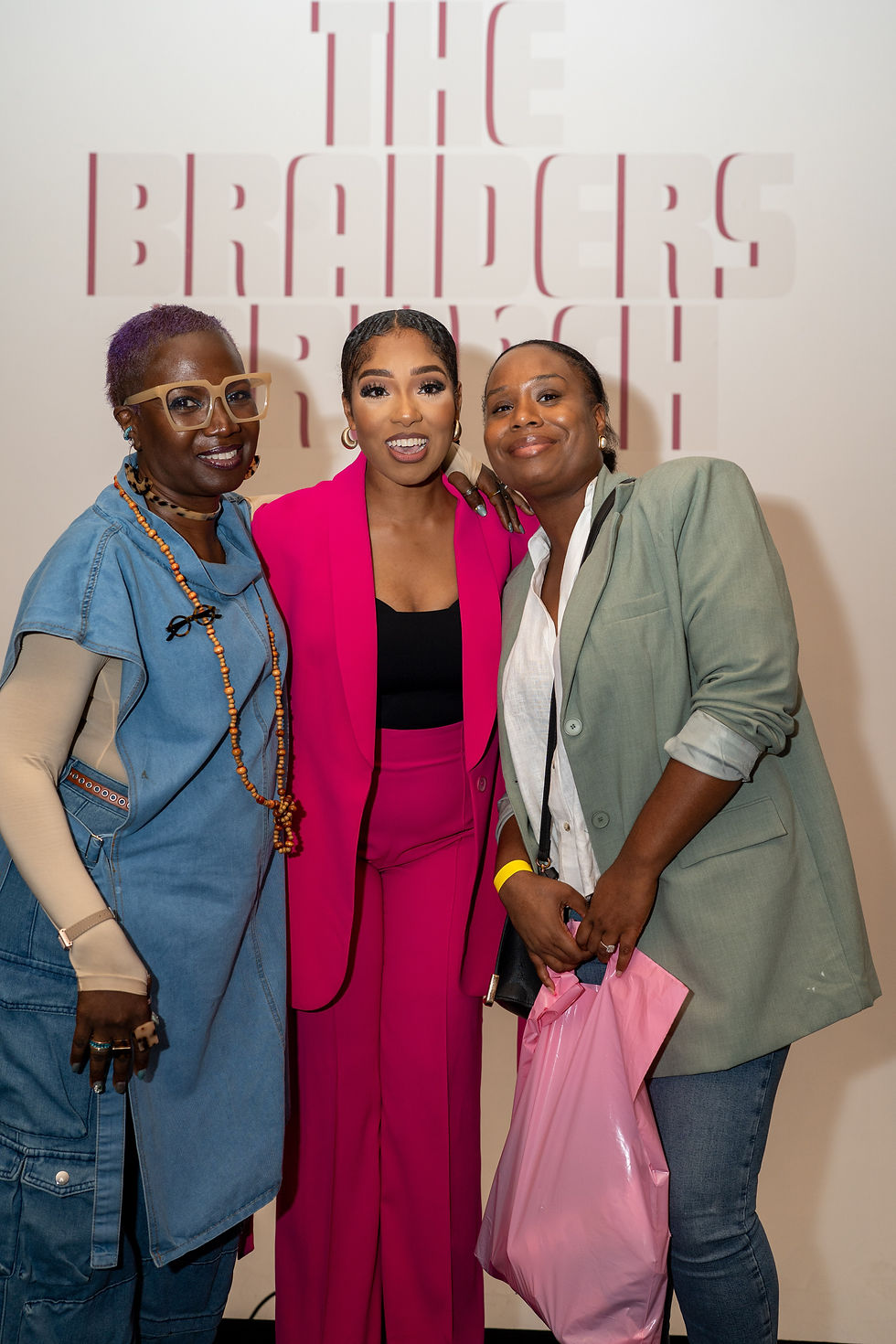
I couldn't find that space, so we created it.
The first Braiders Brunch felt like we were defying the traditional rules of what a professional hair event could look like. We created the kind of experience I would have wanted if I were a braider or textured hair specialist, and the response confirmed everything we had been hearing. We sold more than 250 tickets in under two weeks, and professionals travelled from across the UK and internationally, including from the US, Nigeria, Ghana, France and Germany, to be in the room.
That was the moment we knew this was bigger than an event. The demand wasn't for one day of inspiration; it was for connection, education, visibility and opportunity.
Today, the vision has evolved from creating a room to building an ecosystem. Braiders Brunch remains our annual flagship gathering, but the bigger ambition is to build year-round infrastructure around the professionals we serve: stronger education, career pathways, mentorship, wellbeing support, industry access and opportunities that can help talented people move into spaces such as fashion, editorial, film and entrepreneurship. The first gap was a room. The vision now is an ecosystem.
───
Braiding is often viewed as a beauty service, but it's also an art form, a cultural tradition and a thriving business. What do you wish more people understood about the industry?
I wish more people understood that braiding is foundational to the hair industry, yet professional braiders are still too often treated as though they sit outside of it.
For the general public, I would love there to be a deeper appreciation of just how powerful and versatile braiding is. For one person, braids can be a political statement. For another, they are cultural. They can be practical, creative, expressive or simply the hairstyle that makes someone feel most like themselves. That is the beauty of braiding: it can carry history and meaning while still giving each person the freedom to make it entirely their own.
Braiding also connects people. At its best, the braider's chair can become a safe space. It is a place where relationships are built, stories are shared and, for many people, self-confidence is restored.
From an industry perspective, I want professional braiders to receive the same respect, investment and opportunities as any other hair professional. It is rare to meet someone working in hair who doesn't understand the importance of braiding as a foundational skill, yet the professionals who specialise in it can still be made to feel like an "other" category. That needs to change.
And to brands and retailers, I would say: wake up.
A new generation of braiders is emerging who are digitally fluent, commercially ambitious and building serious businesses. We are seeing professionals turn their skills into thriving careers, education platforms, content, products and entirely new business models. Braiding is not an industry that brands can afford to view simply as a trend or a seasonal marketing moment.

The opportunity goes far beyond selling more products. Brands should be bringing professional braiders into the room as consultants, educators, collaborators and decision-makers. These are the people using products every day, influencing what clients buy and understanding the needs of the community first-hand.
The industry is moving, with or without everyone paying attention. The brands that listen now, invest properly and build genuine relationships with professional braiders will be the ones best positioned for where the market is going next.
───
What have been the biggest challenges - and the most rewarding moments - in building a platform that celebrates braiders and their work?
One of the biggest challenges has been learning how to turn passion into something sustainable without losing the passion that made Braids Gang special in the first place.
In the beginning, I was simply driven by how much I loved the community and how strongly I believed in the vision. But passion alone doesn't build something that lasts. I had to learn the business of building a platform: how to create systems, protect ideas, formalise relationships and build the right team around the vision.
I also had to learn to trust myself.
When you're building something people haven't seen before, not everyone will understand it immediately. In the early days, I sometimes allowed outside opinions to make me question ideas I had felt deeply certain about. There were moments when brands didn't understand why professional braiders needed dedicated investment or why this community should be approached as a serious industry. At times, it felt like we weren't simply pitching a project; we were having to explain the value of an entire profession before we could even begin the conversation.
Over time, I learned that the answer wasn't to argue louder. It was to build the evidence.
We listened to our community. We gathered insight and data. We built projects, created events and showed what happened when professional braiders were given the right space and investment. The work began to speak for itself. It's hard to be ignored when you become undeniable.
That process changed me as a leader. I used to be much more of a people-pleaser. Today, I'm more confident in my instincts, more intentional about who I build with and much clearer that protecting a vision doesn't mean doing everything alone.
The most rewarding part is seeing what exists now because we kept going: watching professionals learn from our educators, seeing brands and industry leaders come to us for insight, connecting opportunities with talented stylists and receiving messages from people who tell us they feel seen by the work.
That impact extends beyond professionals too. If we can help people better understand how to care for their hair and scalp, make informed choices about protective styling and feel confident asking the right questions about the services they receive, then we're also helping to build a more informed generation of consumers.
For me, that is what pushing an industry forward looks like: better-supported professionals, better-informed communities and a stronger standard of care for everyone.
───
Artificial intelligence, automation and changing beauty trends are reshaping creative industries. Where do you see the future of professional braiding over the next five to ten years?
AI is not the future. It is the now - and I think professionals who are serious about growing should at least be open to understanding how it can support them.
For professional braiders, AI has the potential to make the way they work more efficient and effective. It can help build better systems, save time, support research, strengthen business operations and expand access to knowledge. Used properly, it should not replace your opinions, your expertise or the way you think. It should enhance what you already know and give you more time to focus on the parts of your work that require you.
Because technology cannot replace the heart of braiding.
It cannot replicate the talent in someone's hands, the cultural understanding behind the craft or the relationship between a braider and the person sitting in their chair.
Over the next five to ten years, I also think the career possibilities around braiding will expand dramatically. A braider can be an educator, a content creator, a session stylist, a consultant, a product developer, a founder or create a career that doesn't yet have a name. I'm living proof that if you can't see the space you believe should exist, sometimes you have to create it.

The next generation has an advantage in that they have grown up with greater access to information, social media and content creation. Many of them are curious, commercially aware and less willing to accept that things have to remain the way they have always been. I see that as a strength. But access alone is not enough. Professionals of every generation will need to stay curious, keep learning and be willing to invest in themselves.
My concern is not that AI will replace braiders. My concern is that the industry will move forward while some talented professionals are left behind because the infrastructure, access or mindset around them has not moved at the same pace.
By 2031 and beyond, I want to see a professional braiding industry with far stronger infrastructure: recognised education and qualifications, clearer career pathways, more safeguarding, more opportunities beyond the chair and greater investment from the wider beauty industry.
Professionalisation should not mean stripping braiding of its culture or creativity. It should mean building systems that protect the professional, protect the consumer and create more opportunities for both.
The future I want is one where braiders don't have to choose between artistry and opportunity. They should have access to both.
───
If you could change one thing about how the beauty industry values, supports or invests in braiders, what would it be?
If I could change one thing, it would be the ignorance that still exists around textured hair and braiding.
Before the beauty industry tries to understand the skill, I want it to understand the hair. The two are deeply intertwined. You cannot meaningfully serve professional braiders or the people who wear these styles if you haven't taken the time to understand how textured hair works, what the real challenges are and what the community actually needs.
My message to the people making decisions would be simple: learn before you try to serve us.
Too often, we see brands enter this space because textured hair is commercially attractive, culturally relevant or good for social media. But genuine inclusion requires more than visibility. It requires knowledge, intention and a willingness to listen. If you don't understand the hair, seek out the people who do. Bring professional braiders, locticians and textured hair specialists into the room as consultants, educators and decision-makers. Hire people with both professional expertise and lived understanding.
The textured hair community has enormous spending power, and the industry knows that. But people deserve more than being treated as a market opportunity. They deserve quality products, thoughtful services and investment that genuinely supports their hair, health and wellbeing.
I want the industry to become genuinely curious enough to learn, humble enough to ask for help and intentional enough to build with the community rather than simply market to it.
Because when you understand the hair, you make better products. When you understand the professional, you create better opportunities. And when you understand the community, you serve people with far more respect.
───

When attendees leave Braiders Brunch this year, what is the one feeling, lesson or opportunity you hope they take home with them?
I hope they call their friend on the way home and say, “Babe, that was one of the best events I've ever been to.”
Of course, I want them to say the room felt different: that they met incredible people, made new friends, discovered brands, took great pictures and found themselves having conversations they would never normally have access to.
But underneath all of that, I want them to leave feeling different about themselves.
I want the professional who walked in thinking, “I'm just a braider,” to leave understanding that they are so much more than that. They are an artist, a business owner, a creative, an educator, a potential industry leader - and their career can take them wherever they are willing to imagine and prepare for.
I want them to feel that they belong in rooms with industry leaders, agencies, brands and people at every stage of their career. One of the things I love most about Braiders Brunch is that the room isn't built around hierarchy. You can have someone at the beginning of their journey speaking to someone with decades of experience, and the conversation can still feel natural. I want people who don't normally attend networking events to realise that connection doesn't have to feel stiff or intimidating. It can feel like an industry reunion.
And I want them to remember that, as service providers, they deserve to be poured into too.
So much of their work is about caring for other people. But to build a sustainable career, your vehicle has to be well - and that vehicle is your body and your mind. Business systems matter. Education matters. But so do rest, health and self-care.
If someone leaves Braiders Brunch more confident in their craft, more connected to their industry and more aware that their own wellbeing matters too, then we've done what we came to do.
I want them to leave thinking: I can do more than I thought. I belong here. And I deserve to build a career that doesn't require me to lose myself in the process.
───

Building something meaningful often requires sacrifice. Looking back, what has this journey taught you about yourself as a woman, entrepreneur and leader?
Building Braids Gang has taught me that I don't have to shrink myself to be taken seriously.
For years, I think I sometimes suppressed parts of my personality to make other people more comfortable. I've always been bubbly, expressive and naturally optimistic, and there were times when I became very aware that not everyone responded positively to that. As I grew older, and especially as I grew into leadership, I realised something very simple: I'm not going to be everyone's cup of tea, and I'm not supposed to be.
The more authentically I show up, the better I feel - and the better I lead. I'm still learning who I am, but I now understand that being myself is not something I need to apologise for. It's one of my greatest strengths.
Entrepreneurship has also taught me to become comfortable with being uncomfortable. Being a founder and CEO means managing uncertainty, making difficult decisions, leading people and sometimes moving forward without having every answer. I've had to become more resilient, but also more teachable. Leadership isn't about pretending you know everything. It's knowing when to trust yourself and when to remain open enough to learn.
I've also had to learn that, no matter how much I love what I do, my work cannot become my entire identity. Braids Gang means so much to me, but I am still Gabriella outside of what I build.
My faith has played a huge part in that journey. I'm a Christian, and I believe God gives me ideas, direction and opens doors that I could never force open myself. But my faith has also taught me the importance of doing the work. Faith without works is dead. I can pray for the opportunity, but I also have to prepare, show up, send the email, build the idea and keep going.
If I could speak to the Gabriella who started this journey, I would tell her: there is room for you, even when it feels like there isn't.
I would tell her not to take it personally when people don't understand the vision. Sometimes people simply cannot see what you can see yet, and that's okay. I would tell her that failure isn't the opposite of progress; often, it is where the learning happens.
Most importantly, I would tell her not to feel guilty for going after a life and a vision that looks different from what the people around her expected. You don't have to become less of yourself to build something meaningful. If anything, this journey has taught me that the more I become who I really am, the stronger everything I build becomes.
───
Imagine we're sitting here five years from now. What would success look like for Braiders Brunch, and what legacy do you hope Gabriella leaves within the Black hair industry?
Five years from now, success would not simply mean a bigger Braiders Brunch. I would love for it to have grown internationally, of course, but the real measure of success would be what exists around it.
I want Braiders Brunch to remain the flagship room where our industry comes together, but I want Braids Gang to have helped build a much stronger ecosystem for professional braiders and textured hair specialists throughout the year.
I want the 17-year-old who discovers they have a talent for braiding to be able to see a clear future ahead of them. I want them to have access to recognised education, mentors, career pathways and opportunities that show them their skill could take them behind the chair, into fashion, film and television, education, product development, entrepreneurship or somewhere that doesn't even exist yet.
I want the professional who has spent 20 years behind the chair to feel equally valued. I want their experience to be recognised as expertise. I want them to have opportunities to teach, consult, lead and pass their knowledge forward without feeling that the industry has moved on without them.
I want brands, retailers, educators and the wider beauty industry to stop treating professional braiders as an afterthought or a seasonal marketing opportunity. I want it to become normal for braiders and textured hair specialists to be in the rooms where products are developed, campaigns are shaped, education is designed and decisions are made.
I want there to be stronger professional standards, better safeguarding, greater attention to the physical and mental wellbeing of service providers, and more informed consumers who understand how to care for their hair and scalp.
And I want the ecosystem we're building to be global. Braiding is already global; the infrastructure around the people who do it should be too.
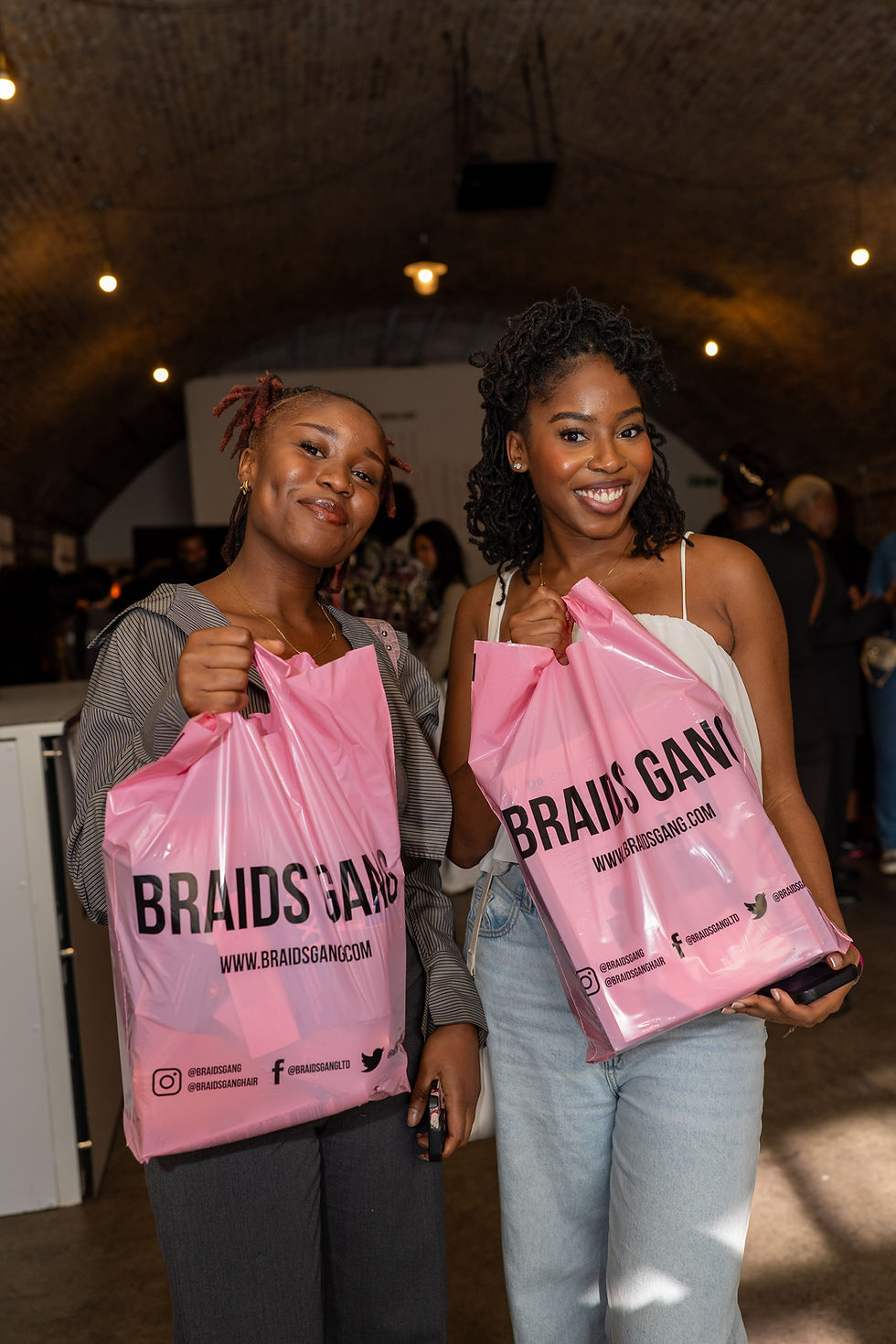
As for my own legacy, I don't need to be remembered as the person who had all the answers. I would be proud to be remembered as someone who saw value where others had overlooked it, built what she wished existed and then held the door open for other people to walk through.
I hope people can say that I helped professional braiders see themselves differently - not only as people who provide a service, but as artists, experts, entrepreneurs and industry leaders.
If, five years from now, the next generation has more access, the current generation has more support and the wider industry has a deeper respect for the people behind the craft, then I will know the work mattered.
I don't just want Braids Gang to participate in the future of the Black hair industry. I want us to help build the infrastructure that future stands on.
Gabriella Anderson isn't simply building an event; she's helping redefine an entire profession.

Throughout this conversation, one message remains constant: professional braiders deserve more than admiration for their craft. They deserve investment, education, representation, wellbeing, influence and a permanent seat at the industry's decision-making table.
As Braiders Brunch continues to grow, its ambition stretches far beyond a single day of networking or inspiration. It is part of a broader vision to build an ecosystem where artistry and opportunity coexist, where tradition meets innovation, and where the next generation of braiders inherit not only a craft but a thriving profession.
If Gabriella's vision becomes reality, the future of Black hair won't simply be shaped by braiders. It will be built with them at the centre.
This year's Braiders Brunch is taking place on the 25th of July 2026. Stay tuned for more updates from this year's event.


Comments