.png)


Braiders’ Brunch 2026: The Conversations About Longevity We Needed to Have


This year’s Braiders’ Brunch brought plenty of hair talk, but some of its most important lessons went far beyond braiding. Across conversations about wellbeing, leadership, boundaries, scalp health and hair retention, one message kept resurfacing: longevity requires care. Whether you are building a business, protecting your health or trying to retain the hair growing from your scalp, constantly pushing through is not necessarily a badge of honour.
Sometimes, the real flex is knowing when to stop.


THE ULTIMATE FLEX: LEARNING TO PAUSE

For many women navigating demanding industries such as the fast-expanding hair and beauty sector, success has traditionally been associated with how much you can carry: the clients, the bookings, the business, the family, the admin and everything else that somehow finds its way onto your plate.
But what happens when the person holding everything together needs looking after too?
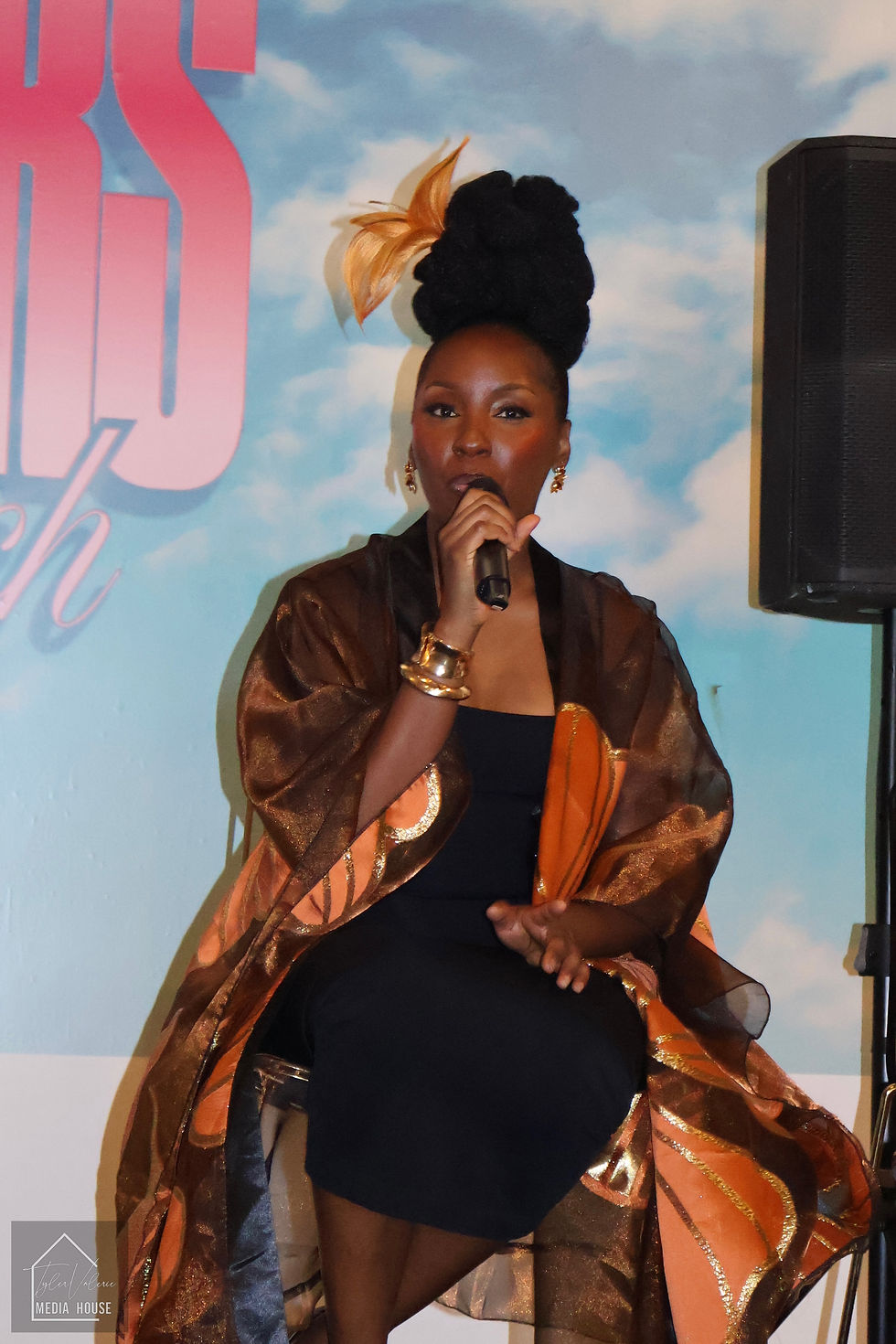
During the Wellbeing & Longevity Panel + Q&A, Braiders’ Brunch founder Gabriella Anderson was joined by multi-award-winning session stylist and designer Lisa Farrall, clinical psychologist Dr Zakiya Reid-Wisdom, and multi-award-winning social entrepreneur, speaker and author Leanne Pero MBE. Together, they explored what it means to build an ambitious career without losing yourself in the process.


The conversation touched on health checks, burnout, delegation, boundaries, rejection, self-worth and the importance of creating a life that can continue functioning even when you need to step away from work.
One particularly important discussion centred on health inequalities and the barriers that can contribute to later cancer diagnoses among some Black and minority ethnic communities. For women working in appointment-led industries, where cancelling a client can mean losing income, it can become dangerously easy to postpone looking after yourself.
The reminder was simple: your health cannot continually sit at the bottom of your diary. Being breast-aware, knowing what is normal for your body and seeking medical advice when something changes matters. Work will always find another space in the calendar. Your health deserves one too.



THE PROBLEM WITH THE SOLOIST MINDSET
That conversation naturally moved into another familiar feature of entrepreneurship: the glorification of doing everything yourself. Running a business single-handedly can look impressive from the outside, but it can also create a business with no breathing room. If everything depends on one person, illness, exhaustion or an unexpected life event can bring the entire operation to a standstill.
Delegation, therefore, is not failure. Building a team, bringing in freelancers and creating systems that allow other people to take responsibility can be an investment in both the business and the person behind it.
The same applies to boundaries. High achievers can become so accustomed to over-delivering that exhaustion begins to feel normal. The panel challenged that mentality, encouraging attendees to pay attention to what their bodies are communicating, establish clearer boundaries around clients and workloads, and resist attaching their entire sense of worth to professional achievement.
There was also something important said about rejection. A “no” does not always require an existential crisis. Pitch anyway. Ask for the opportunity. Approach the person you admire. Seek mentorship. Build relationships. Apply for the bigger job. And if the answer is no, allow it to be an answer rather than a definition of your ability or worth.
Perhaps that is what sustainable ambition actually looks like: working hard without making work the sole measure of who you are.
YOUR BRAIDS ARE NOT PROTECTIVE IF YOUR SCALP IS SUFFERING

If the wellbeing panel asked us to reconsider how we treat ourselves, Paige Lewin’s session asked Black women to reconsider how we treat our hair. Braiders’ Brunch may have been a gathering of braiders, hair specialists, stylists and enthusiasts, but in retrospect, every Black woman interested in seeing her hair reach its fullest potential could have benefited from being in the room. For too long, the conversation around protective styling has celebrated endurance. How long can the braids stay in?
How tightly can they be installed? How sleek can the edges remain? How perfectly can every baby hair be laid into submission? But there can be a price for that perfection.
Founder, Author, Podcast Host, Paige Lewin delivered one of the most practical sessions of the event. Wig in hand, she turned what could easily have become a technical lecture into something accessible, visual and deeply relatable. Drawing partly on her own difficult hair experiences, Lewin explored what repeated tension can do to the scalp and why soreness should not automatically be accepted as part of getting your hair done.
Persistent pulling and tension can contribute to traction alopecia. In advanced cases, prolonged damage can scar the follicles, making hair loss permanent. That makes the obsession with constantly manipulating our edges worth reconsidering too. The hair around the hairline is particularly vulnerable. Repeated brushing, pulling, styling and product use can add further stress to an already delicate area. The takeaway? Scalp health is not an optional extra in a hair routine. It is where hair retention begins.

YOU STILL HAVE TO WASH YOUR HAIR
Another misconception challenged during the session was the idea that once hair disappears underneath a protective style, it can effectively be forgotten until takedown day.
It cannot. Sweat, sebum, dead skin and styling products do not disappear simply because the scalp is covered by braids. Lewin stressed the importance of maintaining scalp hygiene while wearing protective styles rather than allowing months of buildup to accumulate. Depending on the person, style and scalp condition, this might involve carefully cleansing the scalp while braided or using suitable scalp-cleansing products between washes. The principle is straightforward: protective styling should not mean abandoning scalp care.


THE PENCIL, THE LEAD AND WHY CONDITIONING MATTERS

Then came one of the most memorable demonstrations of the session: a pencil and its lead. Lewin used the analogy to explain the structure of the hair strand and why conditioning should be about more than coating its exterior. The cortex-the substantial inner layer of the hair fibre-plays an important role in its strength and elasticity. Conditioning treatments are designed to help improve the hair fibre's condition, reduce friction and make it more resistant to breakage.
For textured hair, which can be particularly vulnerable to dryness and mechanical damage, maintaining moisture and reducing friction becomes especially important. Lewin also discussed the use of gentle heat during conditioning. Warmth can help some conditioning treatments work more effectively, but the emphasis is on controlled, appropriate heat, rather than assuming that hotter automatically means better.
That distinction matters because the objective is not simply to grow hair.
It is to retain what grows.
You can spend weeks wearing braids and celebrate the apparent length at takedown, but if dehydrated strands snap during detangling, much of that progress disappears onto the comb and bathroom floor.
Protective styling, when done properly, should therefore be active rather than passive. It means preparing the hair before installation, avoiding excessive tension, maintaining the scalp while the style is in place, keeping the hair appropriately conditioned and taking the style down carefully.
And perhaps that was the unexpected connection between two seemingly different conversations at this year’s Braiders’ Brunch.
You cannot talk about longevity without talking about maintenance.
Not in business. Not in health.
And certainly not in hair. The goal should never simply be to see how long we can keep going without stopping. It should be to build careers, bodies, businesses and hair-care practices that are healthy enough to carry us much further.
Because whether we are talking about women or their hair, survival is one thing. Retention is another...


THE AVANT-GARDE SHOWCASE
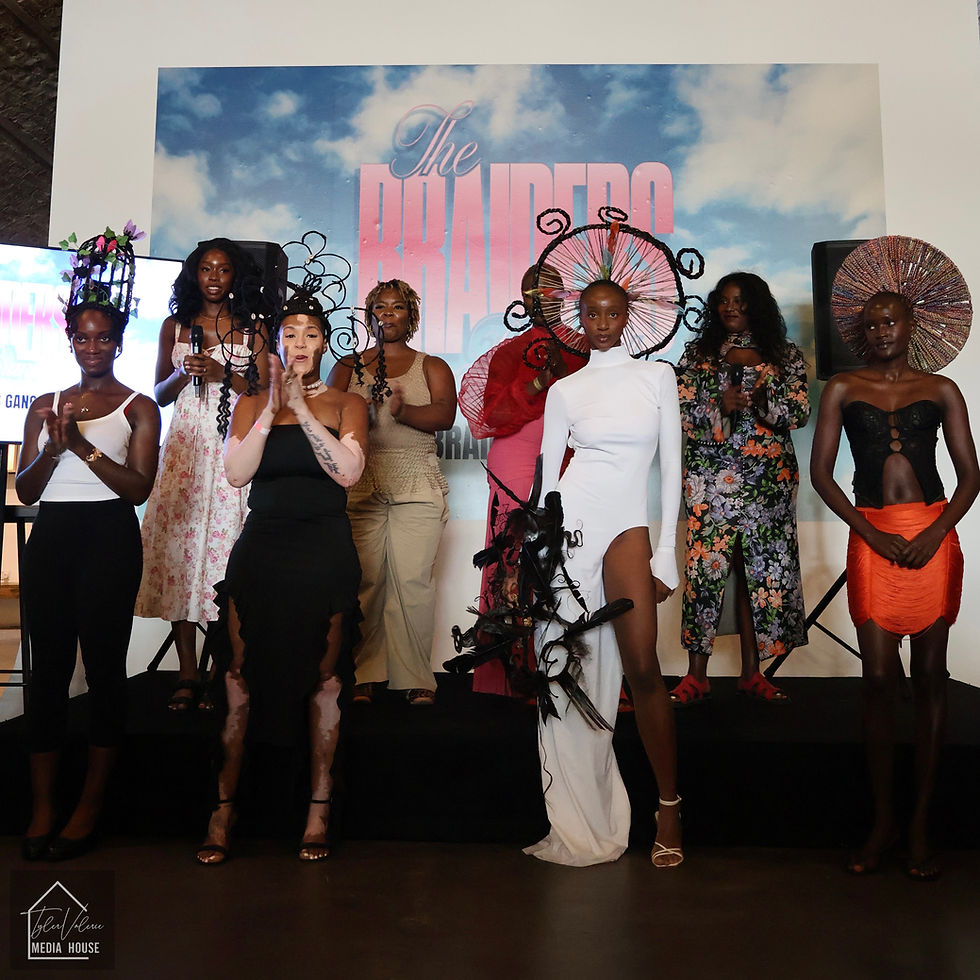
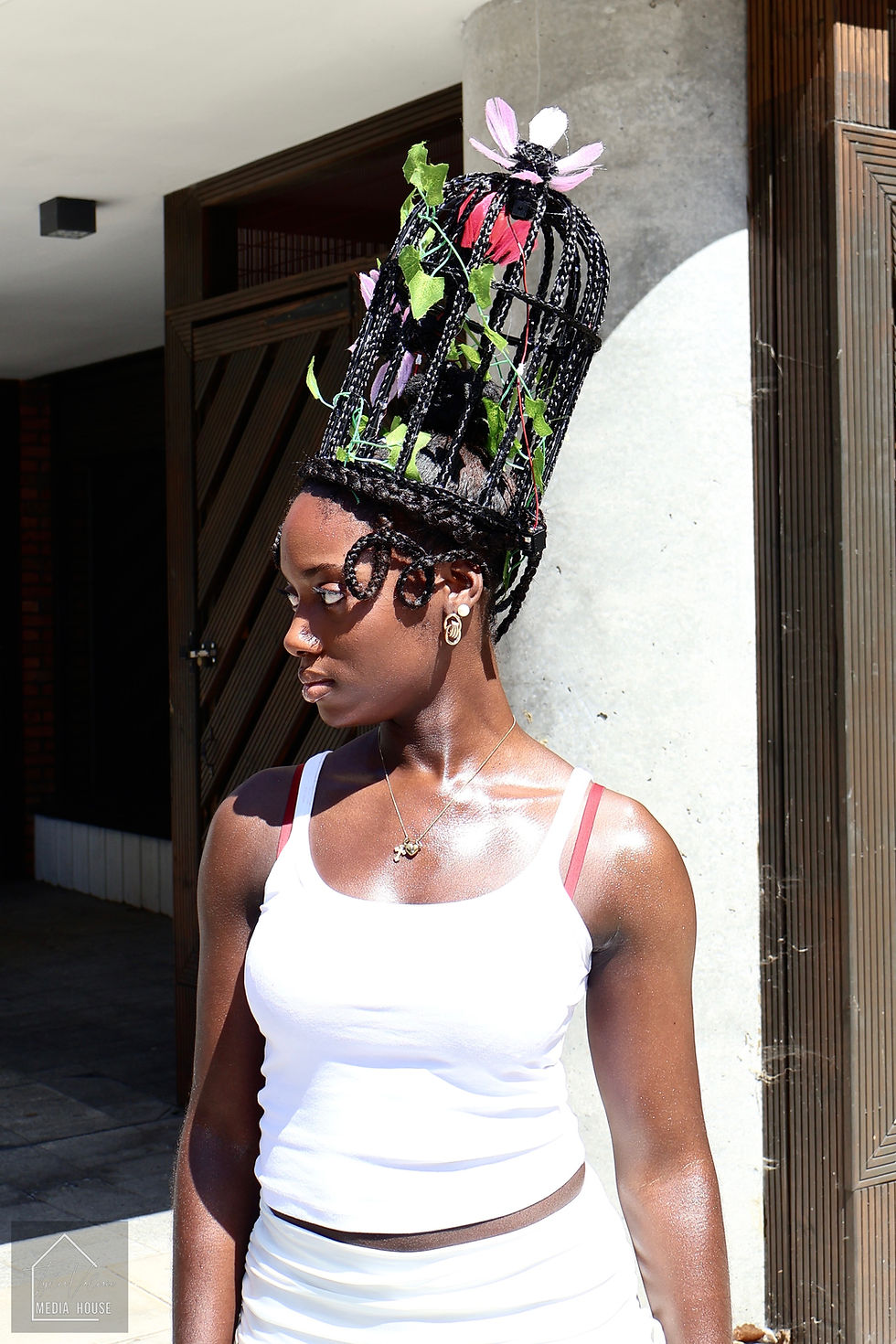
The most memorable highlight of the entire event was probably the Avant-Garde Hair Showcase, a parade of limitless creativity, turning hair into wearable sculpture and proving that the haircraft niche is where true creativity really begins.
Far beyond everyday salon styling, the showcase highlighted how textured hair professionals are pushing artistic boundaries and that they are not just service providers but visionary artists shaping and changing the beauty culture into something far more glamorous than can be put into words.



Comments