.png)


Glow Culture: The Dangerous Return of The Tan
- Obianuju Ogah
- 3 days ago
- 2 min read

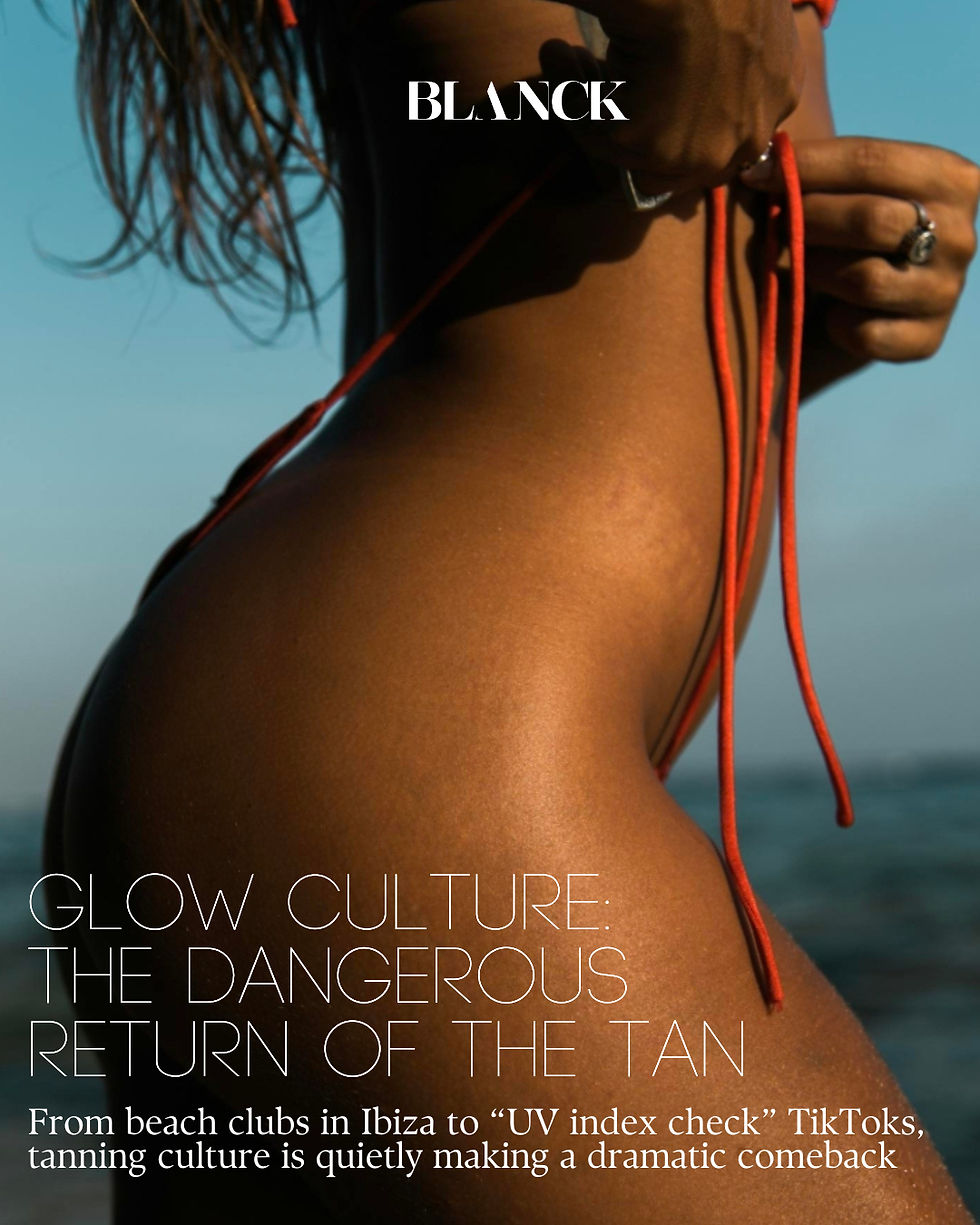
From beach clubs in Ibiza to “UV index check” TikToks, tanning culture is quietly making a dramatic comeback - and young people are leading the charge. Across social media, bronzed skin has become shorthand for beauty, wealth, wellness and desirability. The deeper the glow, the more aspirational the image appears. But beneath the aesthetic lies a growing health concern that experts say mirrors the contradiction at the heart of modern beauty culture.
This is a generation armed with retinol serums, collagen powders, LED masks and elaborate skincare routines, yet many are simultaneously embracing behaviours known to accelerate skin ageing. Sunbeds, tanning oils, prolonged UV
exposure and even dangerous tanning injections are resurfacing in popularity, driven by algorithms that reward the visual fantasy of the “golden glow.”
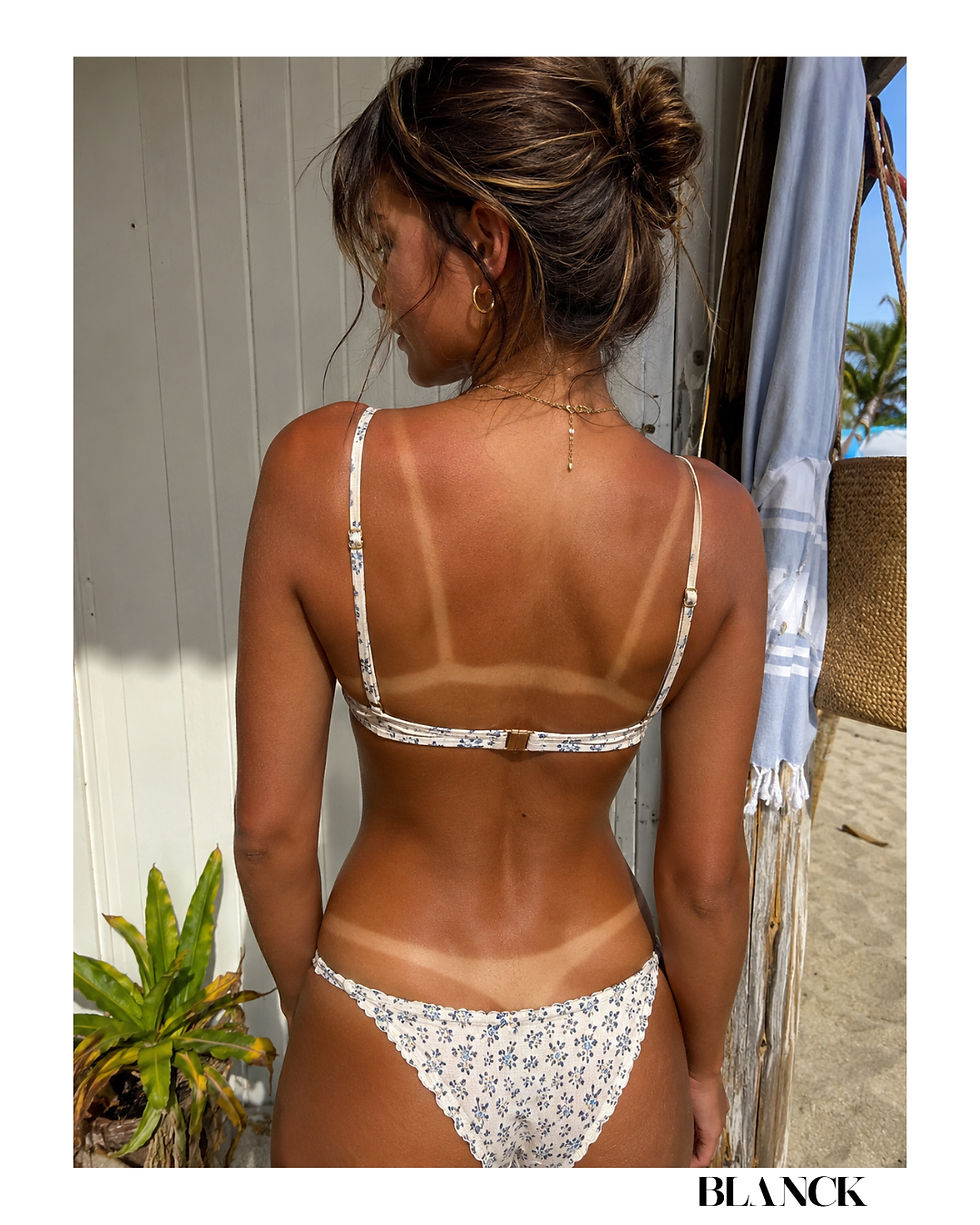
Tanning today is no longer just about getting darker skin. It has become part of a larger lifestyle performance - one tied to luxury holidays, clean-girl beauty, body aesthetics and social validation online. The tan itself has evolved into a status symbol. Looking “sun-kissed” now suggests a life filled with travel, leisure and ease, even when the reality behind the image may be far lessglamorous.
But dermatologists are sounding the alarm. Increased UV exposure remains one of the leading causes of premature aging and skin cancer, with experts particularly concerned about the rise of tanning trends among younger audiences who grew up fully aware of these risks.
The irony is difficult to ignore: in the same era where skincare has become a billion-dollar wellness obsession, many are willingly participating in one of the very things that damages skin the most.
Perhaps the biggest question surrounding glow culture is this: when did looking healthy become more important than actually being healthy?


Comments