.png)


Harry Is Coming Home—but Is Britain Safe for Meghan?
- Indie George
- 17 hours ago
- 6 min read

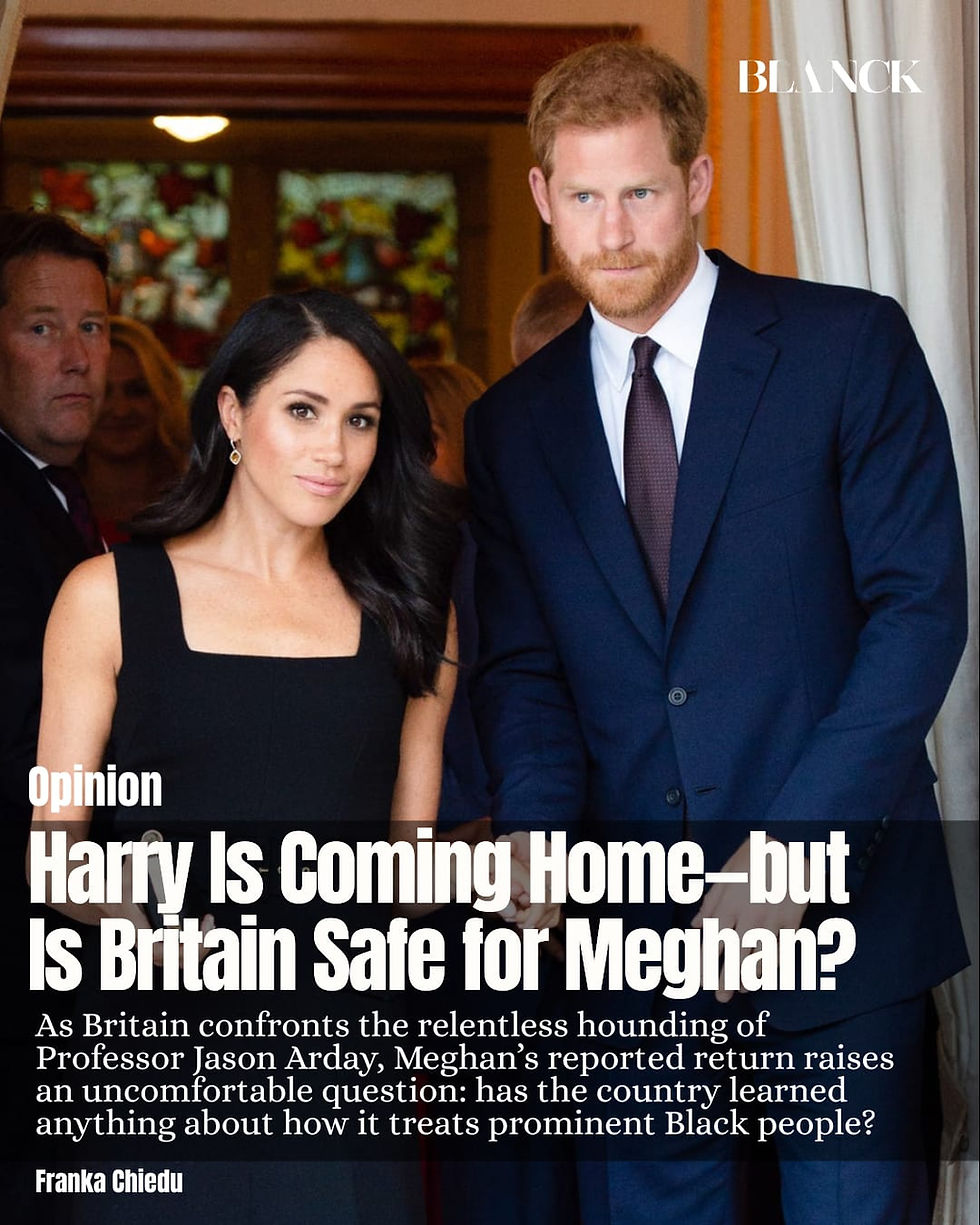
Prince Harry and Meghan, the Duchess of Sussex, are reportedly returning to Britain with their two children for an extended period. Archie, seven, and Lilibet, five, are expected to begin school in the UK in September, while the family lives in a private residence outside London.
They will not return as working royals and reportedly intend to retain their homes in California and Portugal. King Charles is said to welcome the opportunity to spend more time with his son and grandchildren. For Harry, who has openly spoken about wanting reconciliation with his father during the King’s cancer treatment, the decision is understandable.

But the announcement comes at a particularly uncomfortable moment. Britain is still confronting the death of Professor Jason Arday and the relentless scrutiny that preceded it. His death has reopened difficult questions about how this country treats prominent Black people once admiration gives way to suspicion-and whether accountability is applied consistently or weaponised selectively.
The circumstances surrounding Arday and the Sussexes are, of course, different. Arday faced serious allegations concerning plagiarism and aspects of his personal story. Those allegations were legitimate matters for the relevant universities to investigate. Academic integrity matters, and being Black should never place anyone beyond reasonable scrutiny.
But reasonable scrutiny was not where it ended.
Arday’s qualifications, career, charity work, medical history and virtually every part of his life were pulled apart in public. According to a media analysis cited by Al Jazeera, 249 articles about him appeared in the UK media during the 22 days before his death, including 188 in the nine days following his resignation. Cambridge Chancellor Lord Smith described elements of the coverage as a “racist feeding frenzy.”
That does not mean the media caused his death; the cause has not been publicly established, and it would be irresponsible to present speculation as fact. It does, however, require us to ask whether the scale, tone and intensity of the coverage were proportionate-or humane.
It also requires us to ask why the institutions that employed, promoted and benefited from Arday’s extraordinary story were not subjected to the same forensic examination. If his credentials were inadequately checked, that was not his failure alone. Universities appointed him, celebrated him and
presented him as evidence of their commitment to diversity. Yet when questions emerged, the individual appeared to become the primary container for an institutional failure. This is the climate into which Meghan is reportedly returning.
Meghan does not need anyone to explain the power of the British press. Before she and Harry left the UK in 2020, she had already experienced years of coverage that transformed an American actress marrying a British prince into something resembling a national threat. Her clothing, friendships, family relationships, spending, personality and pregnancy were repeatedly examined. Ordinary human behaviour became evidence of calculation. Silence was interpreted as arrogance; speaking was described as attention-seeking. If she smiled, she was performing. If she looked unhappy, she was ungrateful. Even the way she held her pregnant stomach became a matter for public discussion.

Some criticism of Meghan may have been fair. Public figures are not exempt from legitimate journalism, and neither Meghan nor Harry has handled every situation perfectly. Their interviews, commercial deals and decision to disclose private royal conversations have reasonably attracted questions.
But criticism is not the same as obsession.
Accountability is not an invitation to dehumanise someone.
The concern is not that Meghan might face disagreement. It is that Britain has already demonstrated how quickly criticism of her can become racialised, gendered and deeply personal. The hostility did not stop when she relinquished royal duties or moved thousands of miles away. Six years later, her name still generates headlines, outrage and revenue.
Her return could place her-and now her children-back at the centre of that machinery.
What has Britain learned?
The question is not simply whether Harry and Meghan have forgiven the Royal Family or found a workable security arrangement. It is whether the wider British establishment has learned anything since they left.

Has the media reconsidered the way it covers Black public figures? Have editors examined why some people are treated as complex human beings capable of making mistakes, while others are turned into symbols of everything supposedly wrong with diversity, immigration or social progress?
When a prominent Black person rises rapidly, their success is often treated as suspicious. Their competence must be continually proven. Their biography is examined for inconsistencies, and any error risks becoming evidence that their entire achievement was fraudulent.
Jason Arday’s case demonstrated how quickly a debate about one individual’s academic work could become a broader attack on diversity and the supposed lowering of standards. His appointment was used by some as evidence that elite institutions had sacrificed merit to employ a Black professor. Meghan has been subjected to a similar symbolic burden. She is rarely treated simply as one woman with strengths, flaws and personal ambitions. To her fiercest critics, she represents an invading American culture, disrespect for tradition, excessive “wokeness” and the disruption of the British monarchy. She is expected to answer not only for her own decisions but for an entire culture war projected onto her existence.
That is an impossible standard for anyone to survive indefinitely.
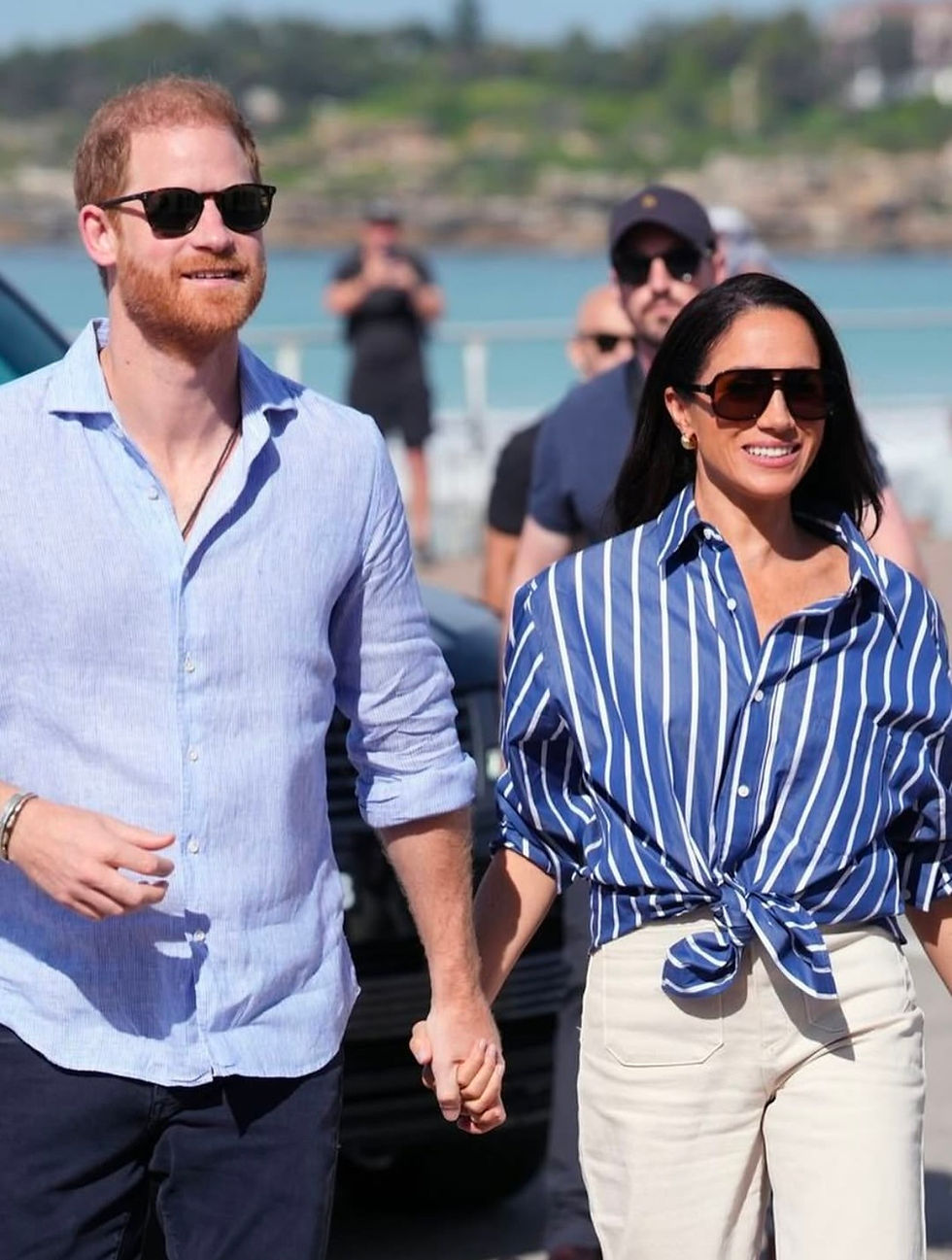
And then there are Archie and Lilibet
The most important consideration may not be Meghan or Harry, but their children.
Archie and Lilibet deserve the opportunity to know their grandfather, understand their British heritage and form relationships with their extended family. They should not have to remain separated from one side of their family because adults have failed to resolve their differences.
But they also deserve privacy. Enrolling the children in British schools will inevitably generate interest in where they live, where they study and whether they see their royal cousins. The same media that has spent years turning their parents’ relationship with the Royal Family into public entertainment may now scrutinise two children who had no role in creating that conflict.
The details of their home and school must therefore remain protected. Their classmates and other parents should not become informal sources for a press hungry for access. Whatever one thinks of Harry and Meghan, their children must not become the next characters in an endless royal drama. Harry’s reasons are still understandable. It is possible to question the wisdom of the move while understanding why Harry may feel compelled to make it.
King Charles is undergoing cancer treatment.
Time is not guaranteed, and Harry may not want his children to grow up without knowing their grandfather. Returning would also allow him to work more closely with his British charities and reconnect with the country that remains part of his identity. There may also be something hopeful in the decision: a belief that reconciliation is still possible and that returning home does not have to mean surrendering the independent life the couple built in America.
But reconciliation with a family is one thing. Re-entering a hostile media environment is another.
Harry and Meghan can establish boundaries with the Royal Family. They cannot control every headline, commentator, photographer or online conspiracy theorist. Their resources may provide protection unavailable to someone like Jason Arday, but wealth and security cannot make a person immune to sustained public hostility.

The real test is for Britain
Perhaps we are asking the wrong question.
Instead of asking whether Meghan and Harry are sensible to return, we should ask why returning to Harry’s own country with his wife and children should require such courage in the first place.
A healthy society should be capable of scrutinising public figures without stripping them of their humanity. It should investigate credible allegations without turning accountability into spectacle. It should recognise that someone can make mistakes without every part of their life being excavated for public consumption.
The tragedy surrounding Jason Arday should have forced Britain to pause. It should have made editors, universities and members of the public reflect on the human consequences of a collective pile-on-even while maintaining the importance of truth and accountability.
Yet the reaction to the Sussexes’ return suggests that the old machinery is already warming up. Questions about security, royal tensions, Meghan’s motives and the children’s schooling began almost immediately.
Harry may be coming home. Meghan may be giving Britain another chance. But the question remains whether Britain has done anything to deserve it.


Comments